For years, I’ve heard about the Enneagram, but had never taken the test myself. Some describe it as a personality test or a tool for self-discovery. Some recommend it as a helpful resource to foster emotional health for pastors, missionaries, and other Christian workers. Some say it lacks biblical grounding, while others trace the origins of the Enneagram to early Christianity.
On a more personal level, I have friends who say they’ve been greatly helped by the Enneagram. When I expressed interest, one friend immediately offered to lend me her stack of books on the subject. One of my seminary students wrote a paper on the Enneagram and spoke positively about the insights she had gained from taking the test. So for Lent this year, I decided to explore the Enneagram for myself, and this is what I’ve learned.
The Enneagram is an exercise in personal reflection.
While the Enneagram is often referred to as a test, it’s not an objective test like getting blood work to test for cholesterol or taking an exam in calculus. Instead, in The Essential Enneagram: The Definitive Personality Test and Self-Discovery Guide, I discovered that the “test” was to read through nine paragraphs and choose the three that best described myself. In The Wisdom of the Enneagram: The Complete Guide to Spiritual and Psychological Growth for the Nine Personality Types, the test meant reading through six paragraphs and choosing the two that fit me best. In both, the point was not objective measurement, but honest self-reflection.
The Enneagram may seem simple, yet recognizes the complexity of human personality.
At its most basic, the Enneagram describes nine personality types, but then goes on to explore how each type behaves when a person feels secure or under stress, and how each type is related to all of the other types. The goal is not to label ourselves or others, but to explore the variation and richness of our unique personalities, including our strengths and areas for growth.
The Enneagram may not yield instant or clear results.
While some might take an Enneagram test and experience an almost immediate aha moment, I had trouble identifying my personality type. When I took the initial test in The Wisdom of the Enneagram, I thought I was type 2, but the more detailed test later in the book said only that I had some type 2 issues or perhaps a type 2 parent. So I took the test in The Essential Enneagram, discovered I was type 9 (strongly influenced by types 1 and 3), then went back to the more detailed test in The Wisdom of the Enneagram that said I “most likely” had a type 9 component.
All of that is not exactly definitive. So I wonder, if I took another version of the Enneagram, would I still be type 9? Or would I be more clearly type 1 or 3, or type 2, 4, or 7 which The Essential Enneagram says are common look-alikes for type 9? Determining personality type according to the Enneagram is not an exact science. But if the goal is personal reflection, perhaps it doesn’t need to be. Instead of trying to pigeonhole ourselves or others, there is value in thinking more broadly.
The Enneagram may offer important insights.
A friend says that the Enneagram helped her to reclaim part of her personality that she had previously ignored. I can’t say that I learned anything new about myself from taking the Enneagram, but I did gain some new language to describe my experience. That in itself has been helpful. I’m now even more aware of my tendency to take on too much, the need to discern my priorities, and to use my time and energies wisely.
The Enneagram requires discernment.
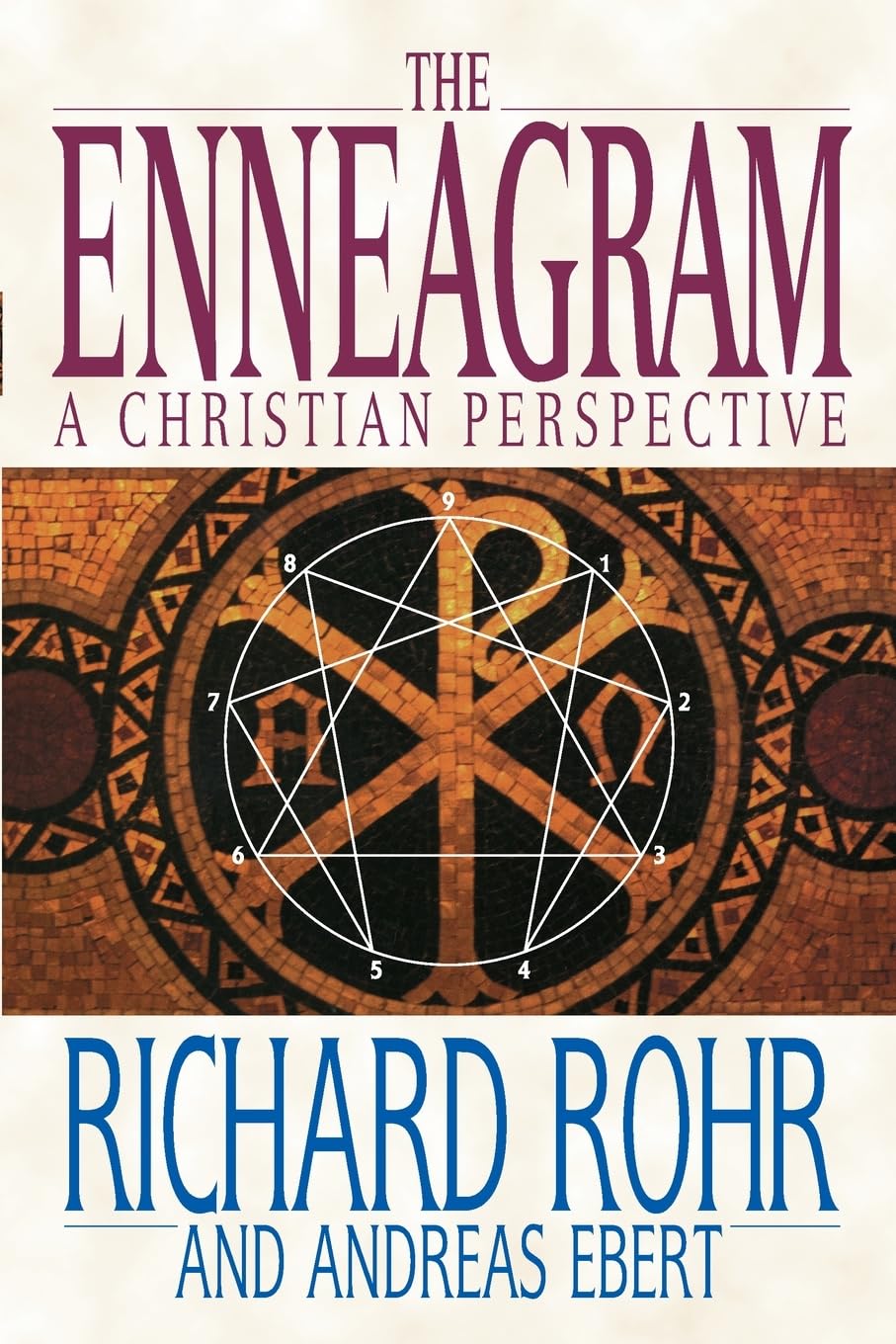
The Essential Enneagram says that for type 9, “the ultimate goal of my development” is to realize that “our worth and well-being come from within.” Yet in my reading of Scripture, our worth and well-being come from God who created and loves us, who saves us by the life, death, and resurrection of Jesus, who sustains and grows us by the Holy Spirit. The Enneagram and Spiritual Direction speaks of growth in health and holiness. The Enneagram: A Christian Perspective begins with a preface on discernment and listening for the Holy Spirit. Different books on the Enneagram may offer different tests, different perspectives, and different goals. These need wise and careful discernment.
The Enneagram in review and a way forward.

For me, the Enneagram was a helpful exercise in personal reflection, used with prayer and discernment according to Scripture. But while the Enneagram can offer valuable insight and help us identify our blind spots, it is not as “definitive” or “complete” as some books seem to claim. Above all, we need the wisdom that comes from God. As James 1:5 encourages us: “If any of you is lacking in wisdom, ask God, who gives to all generously and ungrudgingly, and it will be given you.”
As I neared the end of my Lenten journey with the Enneagram, I received an inquiry from The Marketplace magazine about reviewing a new book: When Working Together Doesn’t Work. When I clicked through for more information, I had to laugh when I saw the subtitle: An Enneagram Guide to Productive Relationships with Coworkers. The book confirms the growing place that the Enneagram has in church circles, and what timing! Clearly my journey with the Enneagram is not yet over, and it has served to pave the way for me to write again for The Marketplace.
My review isn’t due until later this summer, but I look forward to reading and reviewing the book for The Marketplace, and I’ll also share some thoughts on the Enneagram and relationships on this website for when you work for the church, so please stay tuned. . . .
An earlier version of this article appeared in Light magazine: A Christian Review of the Enneagram.




 When You Work for the Church
I’d love to hear from you: