Fasting for Lent
Some years, I’ve made a point of giving up something for Lent. Like fasting from chocolate. Or driving alone in silence instead of listening to music or a podcast. Such small, personal sacrifices are so small that I hesitate to use the word sacrifice. Besides, they’re for a limited time—for just the six weeks of Lent leading up to Easter Sunday. Yet somehow, giving up something during that time has helped me to reflect on the sacrifice of Jesus.
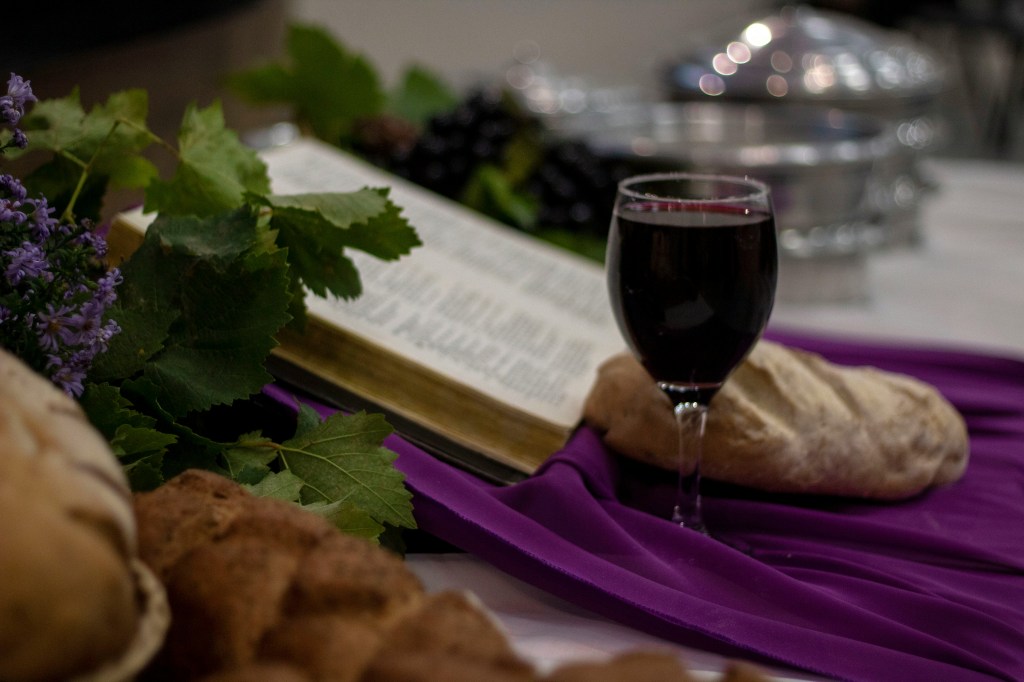
In my congregation, the season of Lent is marked by a change of colour. The usual green hangings at the front of our worship space are replaced by deep purple. Instead of fresh flowers on Sundays, a display of bare branches reminds us of Jesus’ death on the cross. During Lent, we refrain from singing “Hallelujah,” reserving that joyful word of praise for Easter Sunday. In these and other ways, we observe Lent as a solemn time of repentance and reflection on the suffering and death of Jesus.
Feasting for Lent
At the same time, Lent also points to new life. The word itself comes from an old English word—lencten—which literally means to lengthen. That’s an apt description of spring as our days are getting longer, and new life is stirring. We might still get some winter weather, but in my garden, my Lenten roses are rising to new life, and my two primulas from last year are already in full bloom.
Lent’s focus on repentance and suffering is not forever. Because Jesus’ suffering and death were not forever. Instead, the death of Jesus on the cross brought forgiveness from sin and the power to live a new life. It led directly to his resurrection and ascension. It led directly to new life and new ministry for his disciples and for all of us. Lent gives way to life!
That’s why— instead of giving up something for Lent—some years, I’ve added something new as a kind of personal celebration. A Lenten feast! Like doing a jigsaw puzzle. Or going for a walk outside every day. Again, these are small, personal practices, and I confess that I never managed to be as consistent with them as I envisioned. Yet they served to remind me that while Lent is a time to reflect on the suffering and death of Jesus, Lent also means new life. For without the death of Jesus, there would have been no resurrection.
A New Creation
So, if you’re feeling the weight of the world these days, if you’re feeling worn down by too much bad news, ground down by life, if you’re feeling a little too much like dust, remember God’s new creation! Yes, that’s for the eternal life to come—and it’s for here and now. As 2 Corinthians 5:17 says:
So if anyone is in Christ,
there is a new creation:
everything old has passed away;
look, new things have come into being!”
Even now, in the midst of all the turmoil in the world, in the midst of all the uncertainties in our lives, even in the midst of Lent.
In her book, A Choice of Directions, Benedictine nun and theologian Joan Chittister writes:
Lent gives us an opportunity to look again at who we are, at where we’re going in life, at how we’re getting to where we say we want to go. . . . Lent puts options before us. We can choose to be open or hardhearted, attuned to God or closed to everything but the self, full of faith or drowned in despair, stagnant or full of life. Lent is a choice of directions.
In that sense, it’s really Lent all year round. For we make those kinds of choices every day, between being open to God or closed in on ourselves, between being stuck in a holding pattern or living an abundant life.
Fasting and Feasting
In the 1500s, St. Theresa of Avila established a number of monasteries. One day, she and her nuns were having a fine meal quite different from their usual simple supper. I don’t know whether it was during Lent or not, but apparently someone criticized her for eating so well. In response, she replied, “There is a time for penitence and a time for partridge.” In other words, there is a time for confession and repentance, and there’s a time for feasting. We can celebrate because God’s new creation is already here.
In the 1900s, author and speaker William Arthur Ward combined fasting and feasting:
Fast from judging others; feast on the Christ within them.
Fast from discontent; feast on gratitude.
Fast from anger; feast on patience.Fast from complaining; feast on appreciation.
Fast from worry; feast on trust in God’s care.
Fast from unrelenting pressure; feast on unceasing prayer.
Fast from hostility; feast on nonviolence.Fast from bitterness; feast on forgiveness.
Fast from discouragements; feast on hope.—Full litany available here.
As I write this, I’m not yet sure what I’ll give up and/or add for this Lenten season (February 18–April 4). But such small, focused practices have helped me reflect on the sacrifice of Jesus and on the new life of the Spirit. They’ve been so life-giving for me in the past, that I’ve been considering what I might do this year. Maybe I’ll follow William Arthur Ward’s encouragement and practice some version of fasting and feasting.
What has been life-giving for you during Lent and throughout the year? Will you be fasting, feasting, or both?
An earlier version of this article appeared in Light magazine.






 When You Work for the Church
Leave a Reply to schroedereh Cancel reply